
Tamil’s Gift for Deflating the Sacred
Tamil can talk about gods, curses, and mummies using the same casual scaffolding as everyday street speech. That built-in anti-reverence turns grandeur into instant comedy—and shapes how fantasy, mythology, and even VFX get received.
Posted by

Related reading
MCU Thor and Norse Myth: Shared Names, Different Logic
Marvel’s Thor borrows real Norse names and symbols, but swaps the myth’s tone, family ties, and fatalistic cosmology for superhero storytelling. That same “remix” approach is rarer with Indian mythology because it’s a living, devotional tradition with higher cultural and political stakes.
The Odyssey Casting Debate Is a Trust Crisis
The loudest reactions to The Odyssey’s casting aren’t really about diversity or mythic reinterpretation—they’re about audience trust. When studios deny obvious signaling and moralize disagreement, even defensible artistic choices start to read like propaganda.
Abundance Doesn’t Calm Factions It Supercharges Them
Fallout’s pre-war world suggests prosperity doesn’t automatically reduce extremism—it expands what powerful, insulated factions are capable of attempting. When high capability meets low trust and concentrated power, “total solutions” start to look rational.
The Tamil Superpower: Making Mummies Sound Like Lazy Roommates
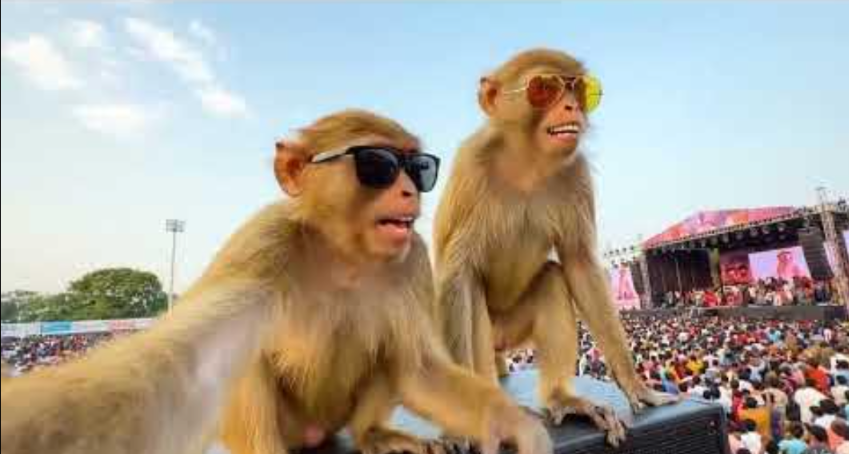 I was watching a Tamil YouTube travel channel—Korangu Bro—where he visits Egypt. In the middle of pyramids and museums and all that “ancient civilization” grandeur, he drops a line that absolutely broke me:
“Anda koil la mummy uyir oda irukkunnu namma Madan Gowri anne Wikipedia paathu sonnaru da.”
Then later:
“Dei inda mandarathe sonna mummy yezhundumaa da.”
It’s the kind of joke that doesn’t fully survive translation, because the funniest part isn’t the idea (a mummy that might be alive). The funniest part is how Tamil lets you say something that should be sacred/ominous/historical in a tone that feels like you’re talking about a neighbor who’s refusing to get out of bed.
And that’s what sent me down a rabbit hole: Tamil has this built-in ability to shrink “serious topics” into everyday speech without changing the grammar much at all. It’s like the language itself refuses to act impressed.
Tamil Doesn’t Automatically Bow to Big Topics
In a lot of languages, the moment you touch religion, death, history, royalty, or anything “important,” the sentence shape changes. You get formal words, respectful distance, elevated phrasing.
Tamil often doesn’t.
You can talk about:
- gods,
- ghosts,
- death,
- curses,
- ancient kings,
- mummies in Egypt,
…and still use the same casual scaffolding you’d use to say “he’s still alive” about some uncle in your street.
That’s why “mummy uyir oda irukkunnu” hits so hard. That phrase can carry zero cinematic weight. It’s the kind of construction you’d use for something completely normal.
The topic is horror-movie material. The grammar is tea-kadai material.
That mismatch is comedy.
“Da”, “Dei”, and “Anne” Are Anti-Reverence Weapons
Tamil has these tiny add-ons—particles and address words—that do a lot of social work. Words like:
- da
- dei
- anne
aren’t just “informal.” They carry attitude. They signal: “I’m not treating this like a documentary voiceover.”
So look at the structure of that first line. It’s not “archaeologists discovered…” or “historians believe…” It’s:
- namma (our)
- Madan Gowri anne (a familiar, brother-like authority figure)
- Wikipedia paathu (looked at Wikipedia)
- sonaru da (said it, da)
That’s a brutal compression of seriousness:
- Egypt becomes content.
- Scholarship becomes Wikipedia.
- Authority becomes “anne.”
- Any remaining respect gets kneecapped by da.
It’s linguistic vandalism, in the best way.
And the second line—“mummy ezhundumaa da?”—is even better because it takes a horror premise and frames it like a dumb, practical doubt you’d ask in school:
“If we say this mantra… will it actually get up, da?”
Not fear. Not awe. Just casual troubleshooting.
Tamil Loves the Anti-Climax
A lot of Tamil humor runs on a specific rhythm: build a setup that could be serious, then puncture it with something ordinary at the end.
The sentence walks toward drama and then swerves into street-level logic.
That “mummy will wake up ah?” line does exactly that. It should sound like:
- “Don’t read the cursed inscription!”
- “We might unleash an ancient evil!”
Instead it sounds like:
- “Dei, will this even work or what?”
Tamil is very good at dragging big, spooky, mythical ideas down into the realm of:
- “seri, but practically…”
- “okay okay, but what’s the use…”
- “will it actually happen though…”
It’s not just comedy. It’s a worldview.
Why Tamil Households Traditionally Don’t Respect Fantasy
This language vibe spills straight into how many Tamil families react to fantasy movies. I’ve felt this firsthand: friends, family—especially older generations—often don’t take fantasy seriously. Only recently it’s changing, and even now a lot of dads (mine included) will watch those movies mainly for visual effects.
That sounds like a personal quirk until you notice how consistent it is.
Fantasy requires you to cooperate with the premise. You’re supposed to accept the rules of the world: dragons exist, magic works, destiny matters, prophecy is real. The whole thing lives or dies on suspension of disbelief.
But Tamil conversational culture has a strong instinct to do the opposite: puncture inflated ideas quickly.
So fantasy gets hit with immediate questions like:
- “Idhellam nadakkumaa?” (Will this even happen?)
- “Logic irukkaa?” (Is there logic?)
- “Seri… next enna?” (Okay… then what?)
That style is great for comedy, debate, and real-world storytelling. It’s terrible for reverent lore.
If you approach a fantasy film with the default Tamil impulse—don’t over-respect anything—then “chosen one” stories automatically sound like somebody hyping up nonsense.
Why VFX Still Works Even When the Story Doesn’t
This is where the “dad watches only for VFX” thing actually makes perfect sense.
If the premise feels fake, the only thing left to admire is the work.
So the appreciation shifts from:
- “Wow, what a world, what a mythology, what a system of magic…”
to:
- “Evlo periya set!”
- “Nalla effort.”
- “Semma graphics.”
Even when the story doesn’t emotionally land, the craft can still impress. There’s a very Tamil kind of respect for visible labor: someone built this, shot this, made it look real. Even if the tale is nonsense, the vela is real.
That’s why the same person can dismiss the lore and still be locked in for the visuals.
Mythology Gets a Pass That Fantasy Doesn’t
Here’s a weird but important split: many Tamil households will accept mythology far more easily than fantasy, even if both contain miracles, monsters, flying weapons, and impossible events.
Because they’re not filed under the same mental category.
Mythology tends to be treated as:
- moral framework,
- cultural memory,
- devotional narrative,
- symbolic truth,
whereas fantasy is treated as:
- “summa imagination,”
- idle entertainment,
- make-believe with no purpose.
Same scale, different social meaning.
So you can have gods doing unbelievable things and people won’t nitpick the “logic” the same way—because the point isn’t world-building, it’s values, duty, suffering, devotion, consequence. The story is anchored to life.
Fantasy that’s only spectacle gets exposed immediately by the Tamil instinct to interrogate: “Okay… but why should I care?”
The Deeper Throughline: Tamil Is Anti-Bullshit
This might be the cleanest way to describe the whole thing: Tamil culture (at least in everyday speech) has a strong anti-bullshit reflex.
It doesn’t love:
- abstraction for its own sake,
- performative awe,
- reverence just because something is “ancient” or “grand,”
- concepts that demand submission without explanation.
So it shrinks big things into familiar forms.
It makes gods feel like someone you can argue with. It makes kings feel mockable. It makes mummies sound like they’re being discussed in the same tone as a friend who’s oversleeping.
That’s why those Korangu Bro lines are funnier than they “should” be. The joke isn’t just in the content. The joke is in the Tamil refusal to switch into a ceremonial mode.
Why It’s Changing Now (A Little)
Still, something has shifted lately, and it’s noticeable. More Tamil audiences can enjoy fantasy as fantasy—less immediate dismissal, more willingness to play along.
Maybe it’s exposure: Hollywood, anime, big franchise storytelling, games—people are trained to accept “rules of the world” as part of the fun. Once you treat fantasy like a system instead of a claim about reality, it stops triggering that instant “idhu nadakkaadhu” reaction.
But even now, the fantasy that lands best tends to be fantasy with grounding—stories where power connects to responsibility, fear, duty, status, family, land. If it floats too far away into pure lore, Tamil will still puncture it. The language is built for the pin.
Conclusion
Those mummy lines are a perfect snapshot of what Tamil does best: it drags the monumental down to human size without apologizing. A curse can sound like gossip. A museum can sound like a street argument. That irreverence doesn’t make Tamil “less serious”—it just makes it allergic to unearned seriousness. And honestly, that’s why Tamil humor hits so hard: it doesn’t let anything stay sacred for free.