
Abundance Doesn’t Calm Factions It Supercharges Them
Fallout’s pre-war world suggests prosperity doesn’t automatically reduce extremism—it expands what powerful, insulated factions are capable of attempting. When high capability meets low trust and concentrated power, “total solutions” start to look rational.
Posted by

Related reading
MCU Thor and Norse Myth: Shared Names, Different Logic
Marvel’s Thor borrows real Norse names and symbols, but swaps the myth’s tone, family ties, and fatalistic cosmology for superhero storytelling. That same “remix” approach is rarer with Indian mythology because it’s a living, devotional tradition with higher cultural and political stakes.
The Odyssey Casting Debate Is a Trust Crisis
The loudest reactions to The Odyssey’s casting aren’t really about diversity or mythic reinterpretation—they’re about audience trust. When studios deny obvious signaling and moralize disagreement, even defensible artistic choices start to read like propaganda.
Is Coffee Ordering actually a Data Entry Job?
The delay at the counter isn’t the espresso—it’s the POS workflow. Customization trees, upsells, loyalty prompts, and multi-channel queues turn even a simple coffee into a careful data-entry process.
Does abundance create extreme factions?
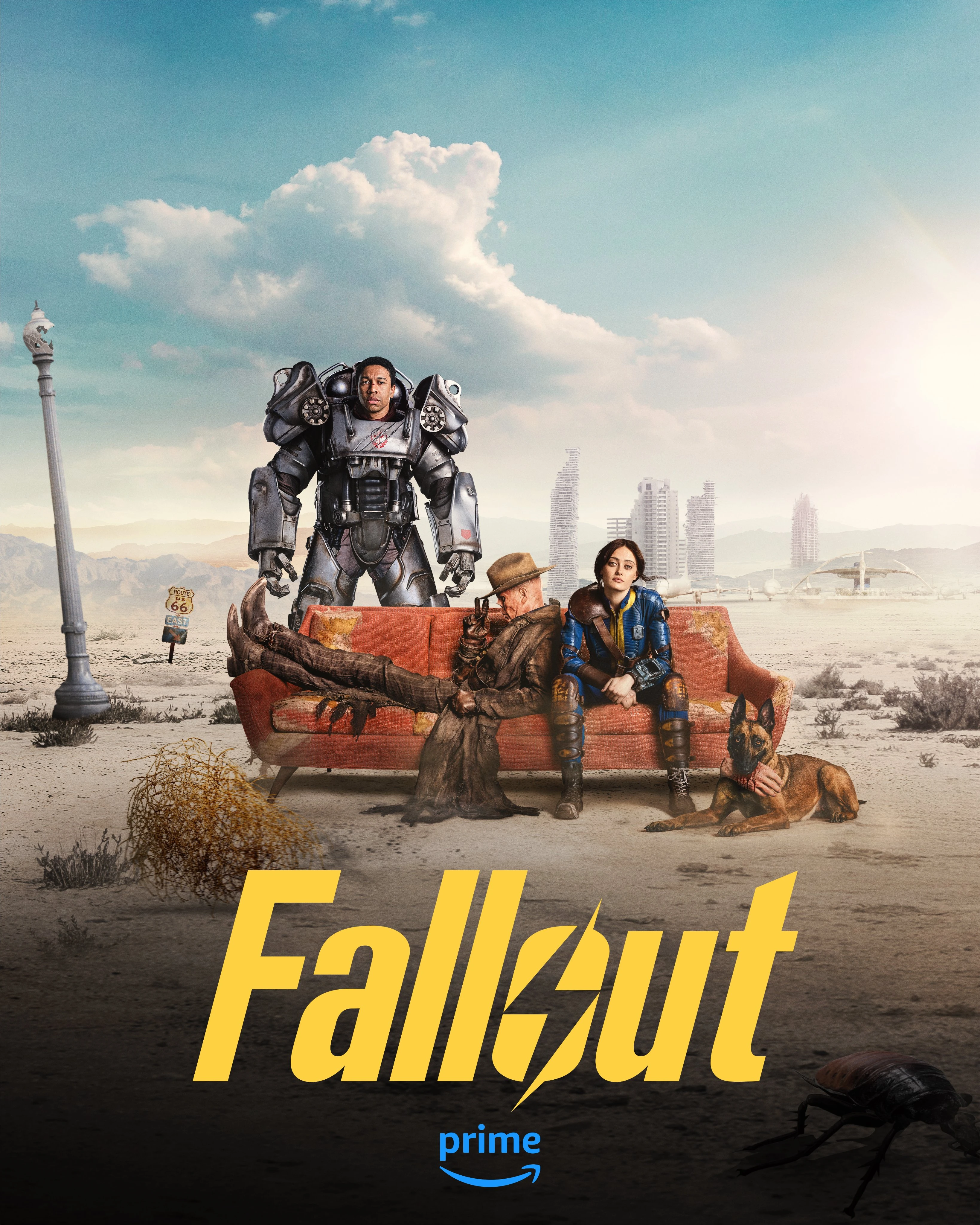 There’s a comforting story people tell about prosperity: when resources are plentiful, society calms down. Politics gets boring. Everyone has something to lose, so nobody pushes the big red button.
Fallout’s pre-war world runs straight through that story like a tank through a picket fence.
Because Fallout isn’t just “the world ended because people got desperate.” It’s also “the world ended because some groups got powerful enough to treat the world like a lab.”
And that’s the real tension worth pulling on: abundance doesn’t automatically make people kinder. Sometimes it just makes them capable. Capable of bigger projects, larger gambles, and more abstract goals—especially when the people making decisions are insulated from consequences.
Fallout’s pre-war setup: energy up, reality down
One of the clearest details in Fallout’s background is the unevenness of “progress.”
- Nuclear power becomes widespread—so energy feels abundant.
- Meanwhile, key physical resources (like oil) are depleted or strained.
- Consumer technology looks futuristic, but the political atmosphere is paranoid and militarized.
- Corporate power doesn’t just influence policy; it behaves like a parallel government.
So the world doesn’t read like a clean “scarcity apocalypse.” It reads like a civilization that solved one constraint (energy) and then used that advantage to accelerate every other dangerous dynamic: competition, surveillance, weapons development, and elite insulation.
That’s important because it reframes the question. It’s not “does abundance prevent collapse?” It’s “what happens when abundance increases the ceiling on what factions can attempt?”
Capability is a multiplier, not a moral upgrade
Abundance doesn’t force extreme behavior. It enables it.
When a society has high energy availability and advanced tech, it expands the set of possible actions:
- You can build projects that dwarf anything a local government could attempt.
- You can automate, scale, and repeat experiments.
- You can maintain secret infrastructure—facilities, labs, vaults—without needing broad social consent.
- You can turn ideology into engineering: not just persuading people, but shaping conditions so people have fewer choices.
This is where Fallout’s biggest factions start making sense. Their extremism isn’t just a symptom of desperation. It’s a symptom of reach. They can think in larger time horizons and larger arenas because they have the tools and insulation to do it.
If you’re stuck fighting over food, your “grand plan” is tomorrow. If you’re sitting on advanced energy systems and deep infrastructure, your “grand plan” can be decades, generations, or—if you’ve fully lost the plot—an attempt to redesign civilization itself.
When the stakes go up, so do the temptations
A strange thing happens when you increase capability: you also increase the attractiveness of “total solutions.”
In smaller, poorer, more constrained systems, politics is often ugly but bounded. The tools are limited. The damage is limited. A faction can ruin a town, not a planet.
But in a high-capability world, factions begin to see options that look like:
- “Reset the board.”
- “Control the post-collapse order.”
- “Run the experiment and harvest the results.”
- “Survive in controlled conditions while everyone else burns.”
This is where Fallout’s Vault-Tec and Enclave-type logic becomes understandable as a style of power, not just villainy.
Vault-Tec: bunker-building as world-building
In Fallout, Vault-Tec isn’t merely a company selling safety. It becomes an institution that treats catastrophe as a design space. The vault isn’t just a shelter; it’s a system for testing, sorting, and controlling people under conditions of extreme stress.
That kind of thinking isn’t “scarcity thinking.” It’s managerial thinking taken to its terminal conclusion: if you can control variables, you can control outcomes; if you can control outcomes, you can justify anything.
The darker implication is that once you have enough infrastructure to survive the consequences, you can start treating disaster as instrumental. Not a tragedy to avoid, but a tool to use.
The Enclave: “species-level” politics
The Enclave sits in a similar category: a faction with enough power, secrecy, and continuity to pursue goals that don’t look like normal politics anymore. It’s not arguing about tax rates. It’s playing for the definition of “legitimate humanity,” the shape of the future, the rules of survival.
And once factions think on that scale, they start acting like the world is a chessboard and the population is just pieces—or worse, just data.
That’s the common thread: when capability climbs, detachment becomes easier. Detachment makes cruelty efficient.
Abundance plus scarcity is the real accelerant
Fallout also avoids a simplistic “abundance causes extremism” thesis because abundance is uneven. Energy may be abundant, but physical resources are strained. Consumer tech may be advanced, but social trust is depleted. You can have glowing cities and rotten institutions at the same time.
That mix is volatile:
- Abundance increases capability (what factions can do).
- Scarcity increases pressure (what factions feel they must do).
- Low trust destroys cooperation (what factions won’t do together).
In that environment, extreme decisions become easier to rationalize. Not because people are starving, but because every actor believes every other actor is about to defect. And once defection becomes the default expectation, escalation becomes “prudent.”
This is the paradox Fallout leans into: a society can be technologically rich and politically feral at the same time.
Power concentration turns “interests” into world-ending plans
There’s also a structural point hiding behind the lore: the bigger the faction, the more abstract its incentives become.
A normal person’s interests are tactile: safety, family, stability. A mega-institution’s interests become statistical: continuity, dominance, control of variables, elimination of risks. When those incentives become the guiding force, the institution starts to behave like an organism that will do anything to preserve itself.
That’s how you get the logic that makes apocalypse feel like “a strategy” to the people at the top.
- If you believe collapse is inevitable, you plan to own the aftermath.
- If you believe rivals are unstoppable, you consider preemption.
- If you believe populations are unpredictable, you try to engineer them.
- If you believe you’re insulated, you start treating moral constraints as optional.
Fallout’s pre-war factions feel extreme because they’re not just large. They’re unaccountable. They don’t have to persuade the public; they can route around the public.
The real horror: not evil, but overconfidence
What makes the Fallout setup stick isn’t that it features mustache-twirling villains. It’s that the path to catastrophe is paved with a believable kind of elite overconfidence.
Overconfidence sounds like:
- “We can control the blast radius.”
- “We can model human behavior.”
- “We can outlast the chaos.”
- “We can rebuild better.”
That’s not desperation. That’s a god complex made practical by infrastructure.
And abundance is what makes that overconfidence actionable. If your world can build vaults, run sealed experiments, and maintain continuity through disaster, then some people will eventually decide disaster is a lever worth pulling.
So does abundance raise the stakes?
Yes—because it raises the ceiling on what can be attempted. Abundance doesn’t automatically make factions more extreme, but it makes extremism more consequential. It turns “bad incentives” into world-scale operations.
In Fallout’s world, you don’t get apocalypse just because people lack resources. You get apocalypse because high capability meets low trust, and powerful factions decide that survival—or dominance—requires moving first.
Conclusion
Fallout’s pre-war lore isn’t a simple morality play about scarcity. It’s a warning about what happens when technological abundance increases institutional reach while politics collapses into paranoia and self-interest. When factions become powerful enough to survive their own mistakes, they start making decisions that look insane to everyone else—and perfectly rational to them. The end of the world stops being unthinkable and starts being manageable, which is when it becomes truly likely.