
The Russia–Ukraine War in Historical Perspective
By modern European standards, the Russia–Ukraine war is a horror—and by longer historical standards, it’s not close to humanity’s worst. Its defining weight is the kind of conflict it is: industrial attrition under modern surveillance, with a nuclear shadow and precedent-setting stakes.
Posted by

Related reading
The Rentier State Behind Authoritarianism
Authoritarianism is often blamed on religion when the deeper cause is political economy. States financed by oil, foreign patrons, or illicit markets can survive without taxation—and therefore without accountability to their citizens.
Why Threats Against Judges Cluster Around Power Disputes
Judges aren’t threatened in proportion to a ruling’s moral horror, but to the losing side’s organized, identity-bound capacity to coerce. The antidote is conduct-based enforcement and post-harm incentive forensics—not category-based repression.
Stop Selling Reservation as Welfare: It’s Representation
The reservation debate stays stuck because it’s framed as compensation, poverty relief, or a temporary ladder. A representation-and-reach framing treats it instead as institutional design: building a state that serves every stakeholder it governs.
How Bad Is the Russia–Ukraine War, Historically?
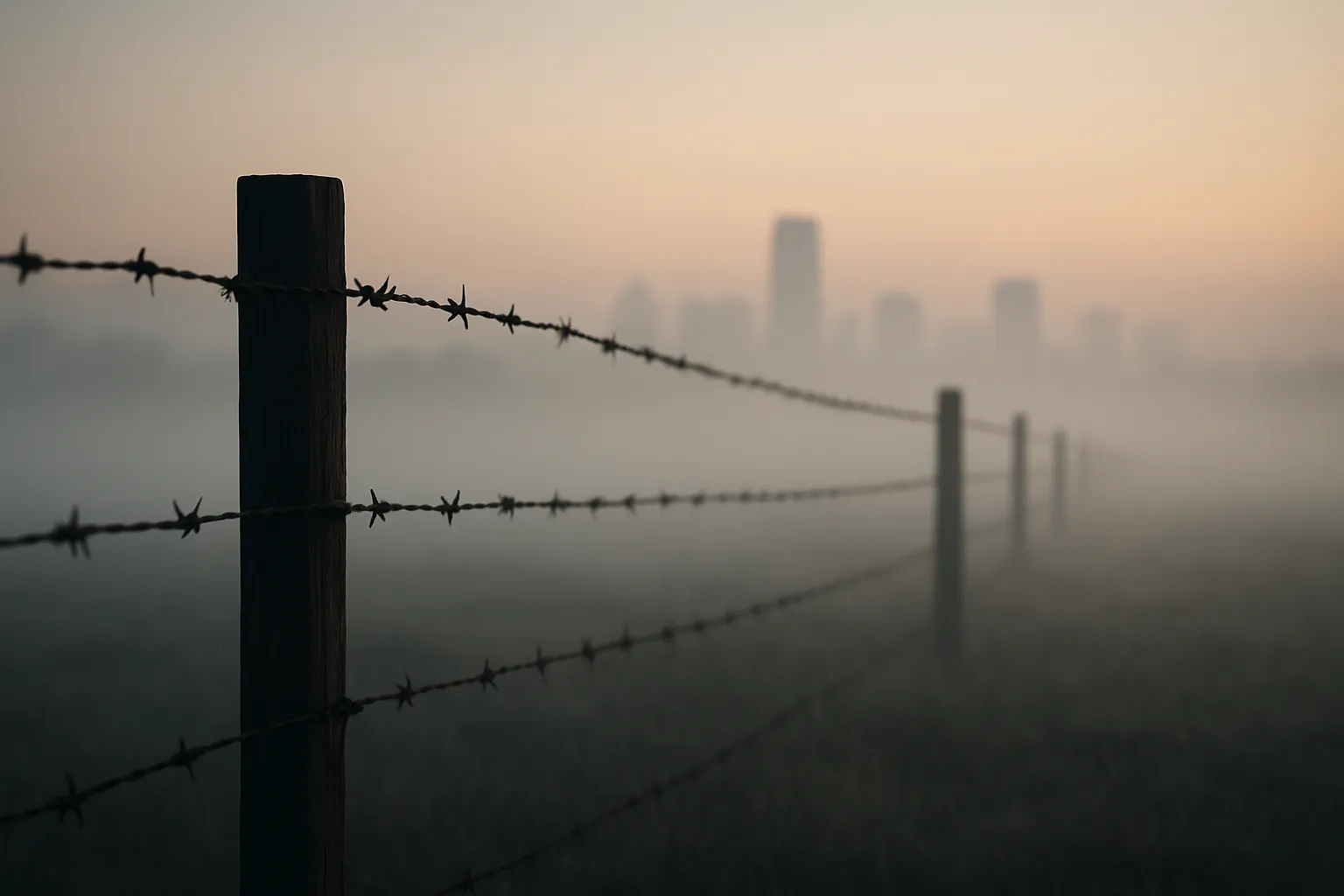
People ask whether the Russia–Ukraine war is “one of the worst wars ever,” and the honest answer is uncomfortable in two directions at once.
By modern standards—especially in Europe—it’s horrifying. By longer historical standards, it’s nowhere near the worst. The real significance isn’t just the body count; it’s the kind of war it is, where it’s happening, and what it threatens to become.
Getting a Grip on Scale (Without Pretending the Numbers Are Clean)
War numbers are always messy. Combatant deaths are contested, civilian deaths are undercounted, and propaganda is everywhere. Still, rough orders of magnitude matter if the goal is comparison.
As of the mid-2020s, many estimates cluster around:
- Total deaths (military + civilian, both sides): roughly 300,000–500,000
- Displacement: roughly 10–14 million Ukrainians displaced internally or abroad
- Duration: more than three years, and not close to a clean resolution
- Destruction: severe damage to towns and cities, massive infrastructure loss, but not “continent-level ruin”
Even the low end of those ranges is staggering. It’s also a reminder of how numbed our historical imagination can get: a half-million dead is an unspeakable tragedy, and still not historically “top-tier” in raw death counts.
What Makes This War Especially Severe
The Russia–Ukraine war isn’t uniquely deadly compared to the worst conflicts humans have created. It’s uniquely dangerous in the post-1945 world, especially for Europe.
1) It’s the biggest conventional war in Europe since World War II
Europe has had violent episodes since 1945, but nothing like this at this scale: sustained front lines, heavy artillery duels, industrial logistics, constant mobilization pressure, and years of attrition.
For many Europeans, war had become something that happened “elsewhere”—a grim news cycle, a distant humanitarian crisis, a policy problem. This war shattered that illusion.
2) It’s industrial attrition warfare with modern tech
Tactically, parts of it feel like a time warp:
- entrenched positions
- artillery dominating large stretches of the front
- grinding territorial gains measured in kilometers
But it’s not World War I reenactment. It’s WWI-style attrition plus drones, electronic warfare, precision strikes, ubiquitous surveillance, and cheap systems that can kill expensive ones. The result is a brutal feedback loop: more visibility, more targeting, more losses, and fewer safe places.
3) The nuclear shadow changes everything
Even if nuclear weapons are never used, they sit in the background like a loaded gun on the table. That affects decisions on escalation, weapons transfers, red lines, and bargaining space.
A war can be “smaller” historically and still be strategically terrifying because of what sits behind it. This one has that property.
4) It’s a stress test of borders, sovereignty, and precedent


Image credit: Wikimedia Commons

The conflict isn’t just about territory in the abstract; it’s about whether borders can be changed by force in a way the world learns to live with. That precedent matters beyond Eastern Europe, because other states watch and learn what aggression costs—or what it pays.
What Limits It (So Far)
It’s also important to say what this war has not become, because that’s part of why it doesn’t compare to the worst historical catastrophes.
- It’s mostly confined to one country’s territory (with spillovers and cross-border strikes, but not multi-theater global war).
- There has not been continent-wide mobilization on the scale of the world wars.
- There has not been a deliberate mass-starvation campaign on the scale seen in some 20th-century conflicts.
- The global economy is affected, but not reorganized into total war the way it was in 1914–1918 or 1939–1945.
These “limits” are not comforting. They’re just perspective: the ceiling is higher than what we’ve seen so far.
Comparison to Historically Catastrophic Wars
If the question is “How does it compare to the worst wars in history?” then there’s a blunt answer: it doesn’t.
World War II: not the same universe
World War II killed on the order of 70–85 million people. It included genocide, mass famine, city-wide firebombing, and nuclear attacks. Entire societies were reorganized for total war, and entire regions were physically and psychologically remade.
Russia–Ukraine is a massive war. World War II was a civilizational catastrophe.
World War I: tactical resemblance, strategic mismatch
World War I killed roughly 20 million and helped break multiple empires. It dragged huge portions of the planet into a meat grinder and produced political aftershocks that shaped the entire 20th century.
Russia–Ukraine can resemble WWI tactically—trenches, artillery, attrition—but not strategically. WWI consumed alliances, empires, and economies on a scale that dwarfs today’s conflict.
Mao-era campaigns and the “policy famine” abyss
Some of the deadliest “wars” in human history aren’t clean battlefield stories at all. They are civil wars plus political campaigns plus state-driven catastrophe, with famine as a weapon or a consequence of policy.
Those death tolls can reach into the tens of millions, largely civilian. They are less discussed in casual “war comparisons,” partly because they don’t fit the familiar template of armies clashing, and partly because acknowledging them forces uglier political conclusions.
Mongol conquests: apocalypse by medieval standards
If you go further back, the scale gets even more surreal. Some estimates for the Mongol conquests reach around 40 million deaths, which may have been roughly 10% of the world population at the time.
That’s not “worse than WWII” in absolute numbers, but it’s apocalyptic in proportional terms. It’s the kind of historical violence that makes modern wars look, statistically, like a different species.
How It Stacks Up Against Modern Wars (Post-1945)
Where Russia–Ukraine does stand out is in the modern era. If the comparison set is “major wars since 1945,” then it belongs near the top tier.
A rough modern frame:
- Korean War: around 3–4 million dead, massive civilian toll, cities erased
- Vietnam War: around 2–3 million dead, prolonged and politically transformative
- Iran–Iraq War: roughly 500,000–1,000,000 dead, years of trench-like attrition and exhaustion
- Russia–Ukraine: roughly 300,000–500,000 dead so far, still ongoing
In that company, Russia–Ukraine is not the single deadliest, but it’s on a trajectory where it can sit among the most lethal post-1945 conflicts—especially because it’s happening in Europe, under nuclear conditions, with major-power stakes.
Iran–Iraq is an especially useful analog in one narrow sense: a long, punishing war of attrition where “winning” becomes murky and the losses become the story.
Why It Feels Uniquely Bad Right Now
The emotional intensity around this war isn’t just moral concern (though that’s real). It’s also about expectation, proximity, and media physics.
Europe forgot war
For decades, much of Europe lived in a relative peace bubble. Not an absence of violence, but an absence of this kind of war: massed fires, sieges, sustained mobilization, and the normalization of huge casualty lists.
When that bubble pops, people don’t just react to the event; they react to the loss of the assumption that the event couldn’t happen.
Live-streamed brutality
This is one of the first major wars where:
- drone footage of killings circulates daily,
- battlefield rumors and propaganda travel at social-media speed,
- civilians experience the war in near-real time from phones.
Constant exposure doesn’t increase the objective death toll, but it increases the psychological weight. The war never leaves the room.
The fear isn’t only about Ukraine
Even a small perceived chance of escalation beyond Ukraine—whether through miscalculation, spillover, or nuclear brinkmanship—creates a strategic anxiety that many other wars (even deadlier ones) didn’t generate for Western publics in the same way.
So, How Bad Is It?
Historically, the Russia–Ukraine war is not close to the worst wars humanity has produced. Modern history is full of conflicts with far higher death tolls, and older history contains episodes that are almost impossible to comprehend in proportional terms. But in the post-1945 European context, this war is a rupture: a return of large-scale conventional combat, fused with modern surveillance and the nuclear shadow, with stakes that extend beyond the front line.
Conclusion
The Russia–Ukraine war is a tragedy at a scale that would dominate the historical memory of many countries, even if it doesn’t rank among history’s absolute worst. Its defining feature isn’t just how many people have died, but how it has revived industrial warfare in a region that thought it had outgrown it. The danger is not only what has happened, but what this kind of war can still turn into.