
Read Sanyal for the Lens, Not the Verdicts
Sanjeev Sanyal is most valuable as a historically grounded, institution-first way of seeing India—not as an authority to agree with wholesale. Treat his work as a corrective you interrogate, and you’ll get far more out of it than devotional certainty.
Posted by

Related reading
The Rentier State Behind Authoritarianism
Authoritarianism is often blamed on religion when the deeper cause is political economy. States financed by oil, foreign patrons, or illicit markets can survive without taxation—and therefore without accountability to their citizens.
Why Threats Against Judges Cluster Around Power Disputes
Judges aren’t threatened in proportion to a ruling’s moral horror, but to the losing side’s organized, identity-bound capacity to coerce. The antidote is conduct-based enforcement and post-harm incentive forensics—not category-based repression.
Stop Selling Reservation as Welfare: It’s Representation
The reservation debate stays stuck because it’s framed as compensation, poverty relief, or a temporary ladder. A representation-and-reach framing treats it instead as institutional design: building a state that serves every stakeholder it governs.
Sanjeev Sanyal Isn’t Always Right — And That’s Why He’s Worth Reading

Every time I see someone say, “Everything Sanjeev Sanyal says is right,” I get the impulse behind it. He’s sharp, he’s confident, and he’s one of the few public intellectuals in India who can connect history, geography, institutions, and economics without turning it into either a sermon or a spreadsheet.
But “everything he says is right” is still the wrong way to relate to him. Not because he’s secretly foolish or malicious—he isn’t—but because treating any thinker as a final authority turns your brain into an applause machine. If anything, Sanyal’s own style (skeptical, irreverent, impatient with inherited dogma) should push you in the opposite direction: take the lens, not the gospel.
What he offers at his best is not a set of conclusions you memorize. It’s a way of seeing.
Where Sanyal is genuinely strong
1) The civilizational lens (used properly)
One reason Sanyal lands so well is that he treats India as a civilizational state, not merely a post-1947 administrative unit. That sounds like a slogan until you sit with what it changes in your mental model.
A civilizational frame forces you to think in:
- long time horizons (centuries, not electoral cycles)
- geographic continuity (rivers, trade routes, urban persistence)
- cultural memory (how ideas and institutions persist even when regimes change)
This matters because a lot of Indian commentary still operates under shallow templates: India as “a young nation,” India as “a developing country trying to become the West,” India as “a failed version of Europe.” Sanyal punctures that. Not always politely.
He’s particularly good at challenging lazy colonial narratives that still dominate parts of Indian intellectual life—narratives that assume Indian systems were static until the British arrived, or that modernity is something you import in a box labeled “Western institutions.”
That corrective alone is valuable, even when you don’t like his tone.
2) Economic pragmatism instead of economic romance
Another reason people latch onto him is that he’s anti-romantic about socialism and moral grandstanding. He doesn’t treat the economy like a stage for virtue signaling. He treats it like a system of incentives, constraints, and tradeoffs.
He understands a few things many loud commentators skip:
- you can’t “copy-paste” Western solutions into India and expect Western outcomes
- path dependence is real: history shapes institutions, and institutions shape behavior
- state capacity is a bottleneck, not a footnote
- moral posturing doesn’t defeat incentives
This makes him refreshing in a landscape filled with people who argue as if intention equals outcome. He generally doesn’t do that. He asks: what happens when this meets India as it actually is?
3) Institutional realism (and impatience with utopia)
Sanyal’s best mode is institutional realism: institutions matter more than intentions; governance is about execution; the same “reform” can succeed or fail depending on state capacity and political incentives.
He pushes back against utopian reform talk that ignores how India functions on the ground. That includes both Left-liberal fantasies (“just spend more and everything will improve”) and simplistic Right fantasies (“just deregulate and everything will become Singapore”).
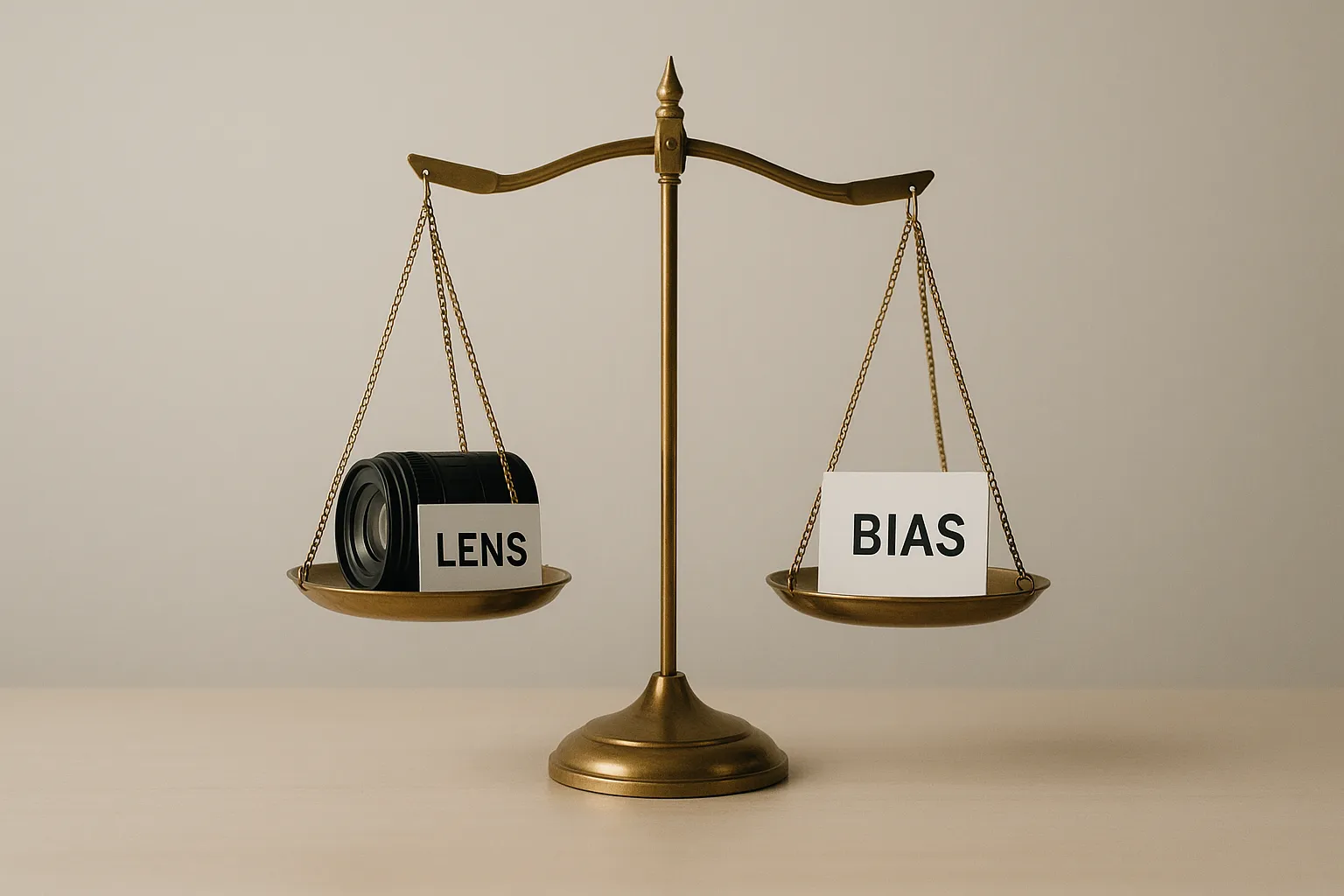

Image credit: Wikimedia Commons

He’s not a utopian. He’s not even sentimental. That’s a strength.
Where the weak spots show up
If you read Sanyal as a corrective, he’s fantastic. The problem begins when people read him as a prophet. Because once you do that, you start defending his blind spots instead of noticing them.
1) Selective skepticism
At his strongest, Sanyal applies ruthless scrutiny to inherited narratives—especially those that became fashionable in English-speaking Indian academia and media.
But that skepticism can become asymmetrical.
He often interrogates Left/liberal claims like a hostile cross-examiner, while treating state failures from his own ideological neighborhood with a softer touch. Not always overtly. Sometimes it’s simply what gets emphasized, and what gets brushed past.
This is subtle, and that’s why it matters. The most persuasive bias isn’t the kind that screams. It’s the kind that nods.
A useful test: notice when the tone changes from “prove it” to “of course this is complicated.” Both can be true. But the distribution of that charity tells you where the loyalties are.
2) Overconfidence in elite rationality
There’s also a recurring faith that smart technocrats, long-term planning, and enlightened governance will naturally correct course if we just get the narrative right and set the right direction.
That’s appealing. It’s also frequently wrong.
India’s problems are not only about misunderstanding. They’re often about structural traps:
- bureaucratic inertia
- rent-seeking ecosystems
- political myopia
- institutional incentives that reward delay and punishment avoidance
- coordination failures between agencies and levels of government
Technocratic competence helps, but it doesn’t magically dissolve these constraints. Sometimes Sanyal’s framing can lean too much into “if we think correctly, the system will follow.” In reality, the system often resists correct thinking with impressive stamina.
3) When civilizational framing becomes rationalization
The civilizational lens is powerful. It can also become a sedative.
Explaining historical roots is not the same as excusing present dysfunction. But the line can blur if you’re not careful.
Sometimes Sanyal’s tone shifts from analysis (“here’s why this pattern exists”) to a kind of indulgent rationalization (“this is why you shouldn’t expect better”). The civilizational frame can accidentally become a shield: a way to repackage governance failure as destiny, or to treat institutional weakness as a cultural constant instead of a fixable constraint.
History can explain a lot. It shouldn’t be used to lower standards.
The real problem with “everything he says is right”
When someone says “everything he says is right,” I don’t hear certainty. I hear ideological alignment.
It usually means one of two things:
- He’s reinforcing priors you already had, just with better vocabulary and confidence.
- You’re outsourcing skepticism to someone you respect—letting him be the one who doubts, so you don’t have to.
Neither is ideal.
The whole point of engaging public thinkers is not to find someone who permanently agrees with you. It’s to find someone who forces you to refine your model of reality. Total agreement is a sign you’re consuming confirmation, not insight.
Sanyal is best treated as a counterweight, not a compass.
A better way to read him: lens, not scripture
If I had to offer a simple mental model, it’s this:
- 80% valuable lens
- 20% agenda + blind spots
That mix is not a criticism; it’s normal. Every serious thinker has a lens and a bias. The ones worth reading are the ones whose lens is strong enough that you’re willing to do the work of adjusting for the bias.
So use Sanyal to:
- deprogram colonial hangovers
- question stale “development” clichés
- take institutions seriously
- resist moralistic economics
But don’t let him become a replacement orthodoxy. The worst intellectual move is not believing the wrong thing. It’s believing the right thing for the wrong reason—because someone said it with authority.
Conclusion
Sanjeev Sanyal is a valuable corrective in Indian public discourse: historically grounded, economically pragmatic, and institutionally aware. He’s also human—ideologically situated, occasionally selective, and sometimes too optimistic about elite rationality. If you read him with active skepticism rather than devotional agreement, he becomes far more useful. The goal isn’t to find someone who is always right; it’s to build a mind that doesn’t need that illusion.