
How to Edit ChatGPT Output So It Doesn’t Sound Robotic (7 Practical Fixes)
ChatGPT can draft a post in minutes—but raw output often sounds generic, repetitive, and robotic. Here are 7 practical editing techniques to make AI-generated blog posts sound human, specific, and unmistakably yours.
Posted by

Related reading
When Voice Cloning Becomes Accent Caricature
AI voice cloning can preserve a speaker’s timbre while replacing their pronunciation and cadence with a demographic stereotype. Treating Indian English as a single preset turns personalization into systematic misrepresentation.
Cameras and microphones capture well-defined physical signals, while smell and taste emerge from complex chemical patterns. Electronic noses and tongues exist, but their sensors and AI remain specialized rather than universal.
AI Product Demos Need UI Understanding, Not Just Editing
Most “AI demo” tools are just smarter screen recorders working on pixels. The real leap is treating the interface like a scene—auto-directing zooms, pacing, and highlights based on what the UI elements mean.
How to Edit ChatGPT Output So It Doesn’t Sound Robotic
ChatGPT is incredible at getting you from “blank page” to “complete draft” in minutes. The problem is that a lot of that draft reads like it was assembled in a corporate meeting where nobody was allowed to have a personality.
Aspiring bloggers feel this immediately: the post technically makes sense, but it’s bland, safe, repetitive, and weirdly polished in a way that doesn’t feel human. Readers bounce. You feel embarrassed. And you start wondering if you’re doing something “wrong” by using AI at all.
You’re not. The mistake is publishing the raw output.
ChatGPT is a drafting tool. Editing is where your voice shows up.
Why ChatGPT Sounds Robotic (and Why Readers Notice)
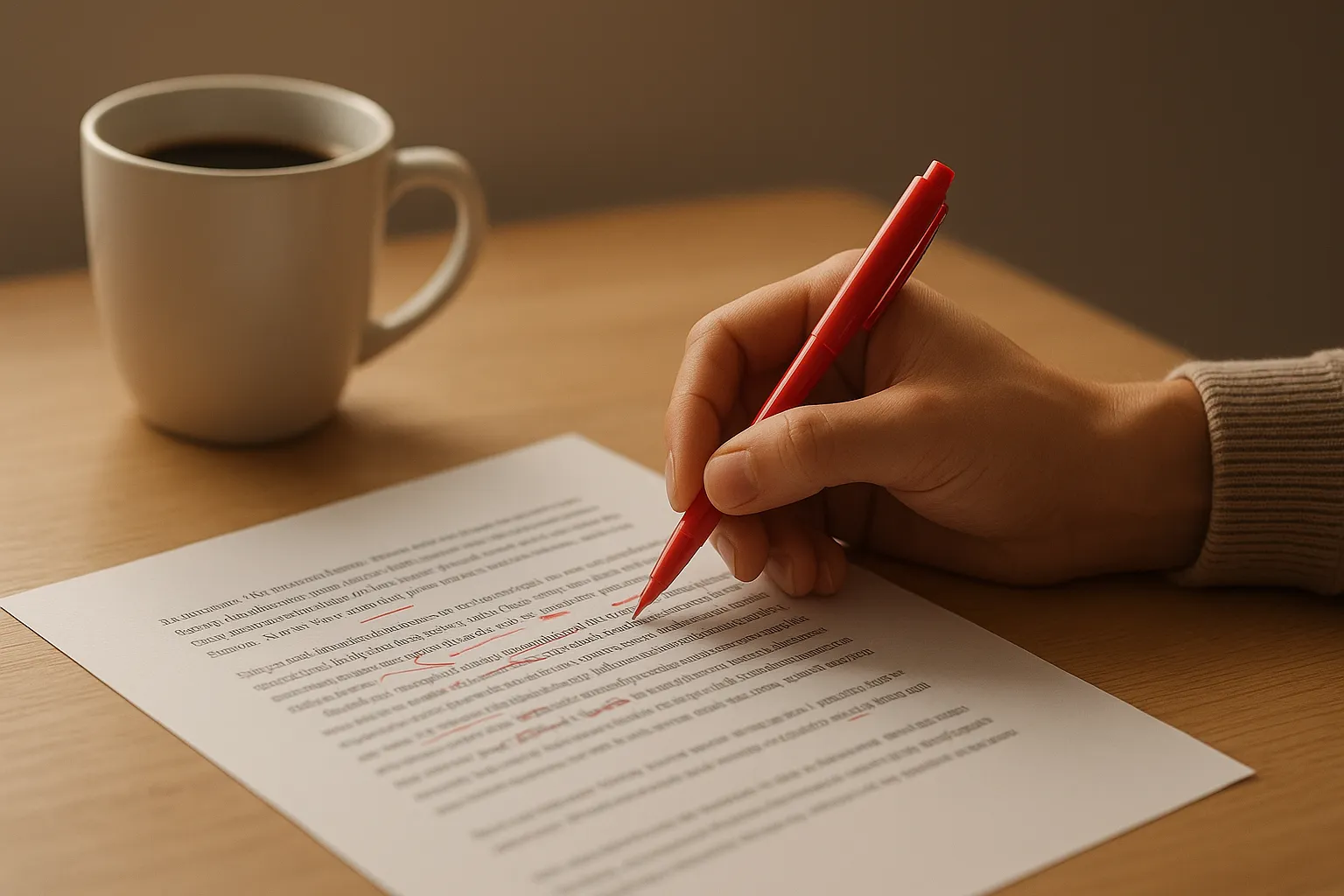
Most “AI-sounding” writing has the same fingerprints:
- Generic openers that say nothing (“In today’s digital world…”)
- Abstract language (“results,” “success,” “leverage,” “value”)
- Predictable rhythm (same sentence length, same paragraph structure)
- Hedging and neutrality (“may,” “can,” “some people believe…”)
- Over-politeness (“It is important to note that…”)
- No lived detail (nothing specific enough to be real)
The fix isn’t complicated. But it does require you to stop treating the draft like a finished product.
7 Practical Editing Techniques That Instantly De-robot Your Draft
1) Delete generic fillers and cliché intros
ChatGPT loves throat-clearing. Those first two sentences often exist purely to sound “bloggy.”
Robotic:
In today’s fast-paced digital world, content creation has become more important than ever.
Edited:
Most bloggers are publishing faster than ever—and most of it sounds the same.
What to do:
- Cut any opener that could appear on 10,000 other posts.
- Start with a real claim, a tension, or a blunt observation.
If you’re not a strong writer yet, here’s a cheat code: keep the middle, rewrite the first paragraph yourself.
2) Replace abstract words with specific language
AI loves soft, foggy nouns. Humans talk in specifics.
Robotic:
This strategy can significantly improve your results.
Edited:
This strategy turned my “meh” draft into something I’d actually publish—because it forced me to add numbers, examples, and a point of view.
What to do: Replace vague words with something concrete:
- “results” → signups, clicks, replies, sales, read time
- “improve” → doubled, dropped, increased by, cut in half
- “audience” → freelance writers, new parents, junior designers, etc.
If you don’t have a metric, don’t fake one. Use observable specificity instead:
- the tool you used
- the exact change you made
- the constraint (time, length, format)
- what it looked like “before”
3) Break the predictable sentence rhythm
A lot of AI text feels robotic because it marches. Same length sentences. Same structure. Same transitions.
Robotic:
First, you should analyze your content. Next, you should revise unclear sections. Finally, you should optimize formatting.
Edited:
Start by cutting what’s unclear.
Tighten the weak sections next.
Formatting comes last.
What to do:
- Mix short and long sentences.
- Use fragments occasionally (like you do in real life).
- Cut the “First/Next/Finally” training wheels unless you truly need them.
Robotic writing isn’t just what you say—it’s the cadence.
4) Remove hedging and add conviction
ChatGPT defaults to “safe.” Safe reads like nobody believes it.
Robotic:
Some people believe editing is important when using AI tools.
Edited:
If you publish ChatGPT output without editing it, your writing will sound generic. Period.
What to do:
- Delete “some people,” “it may,” “it can,” “in many cases,” “often,” unless uncertainty is genuinely part of the point.
- Replace neutrality with a clear stance.
You don’t have to be obnoxious. You just have to sound like a person who means what they’re saying.
5) Add one personal micro-detail per section
You don’t need a memoir. You need texture: one detail that proves a human was here.
Robotic:
Many bloggers struggle with AI-generated content.
Edited:
The first time I pasted ChatGPT output into my blog, it read like a corporate HR memo—technically correct, emotionally dead.
What to do: Add one of these:
- a quick personal moment (“the first time I…,” “I noticed…,” “I used to…”)
- a constraint (“I gave myself 15 minutes to…”)
- a failure (“I tried X and it flopped because…”)
- a sensory detail (“it felt like reading terms and conditions”)
This is the fastest way to make AI-assisted writing feel unmistakably yours.
6) Cut over-politeness and corporate fluff
AI pads sentences with formalities that nobody talks like.
Robotic:
It is important to note that consistency plays a crucial role in achieving long-term success.
Edited:
Consistency matters.
Or, if you want it to sound like you:
Consistency matters more than hacks. Post, learn, repeat.
What to do: Search your draft for:
- “it is important to”
- “crucial”
- “significantly”
- “in order to”
- “moreover,” “additionally,” “furthermore”
Then delete or rewrite with fewer words and more bite.
7) Rewrite the introduction and conclusion yourself (even if you keep everything else)
The intro and conclusion are where AI is most obviously AI—because they’re formulaic. If you only edit two parts of the post, edit these.
Robotic conclusion:
In conclusion, ChatGPT can be a helpful tool for bloggers. By following these tips, you can improve your writing and achieve better results.
Edited conclusion:
ChatGPT drafts fast. You still have to think. The difference between “AI sludge” and a post people share is simple: specificity, rhythm, and a real opinion.
What to do:
- Use the intro to set a human frame: what you’ve seen, what annoys you, what’s at stake.
- Use the conclusion to say what you actually believe—briefly—then stop.
If you’re starting from messy AI threads and trying to turn them into a coherent article, it helps to structure the raw material first. (Internal link: How to Convert ChatGPT Conversations Into Blog Posts.)

Image credit: Wikimedia Commons


How to Inject Opinion and Specificity (Without Killing SEO)
A lot of people think SEO writing has to sound neutral. It doesn’t. It has to be clear.
Here are practical ways to add “human” without turning your post into a rant.
Add micro-opinions (small, sharp beliefs)
Instead of:
AI can be a helpful tool for bloggers.
Write:
AI is a productivity amplifier—but a terrible final editor.
Micro-opinions work because they’re specific enough to be yours, but still broadly relevant.
Swap “you should” advice for lived experience
Instead of:
You should review your tone.
Write:
The fastest way I fixed robotic tone was deleting the first paragraph ChatGPT wrote and rewriting it like a text to a friend.
It’s still instructional. It just doesn’t sound like a compliance document.
Add constraints that prove a human made choices
Constraints are underrated because they instantly signal authorship:
- “I keep intros under 60 words.”
- “I cut 30% of the adjectives on the second pass.”
- “I only allow one transition per paragraph.”
Even if the reader doesn’t copy your exact constraint, it makes your process feel real.
Quick Editing Checklist (Run This Before You Publish)
- Did I delete cliché openers and filler phrases?
- Did I replace abstract nouns with specifics (numbers, examples, constraints)?
- Did I vary sentence length and remove predictable rhythm?
- Did I remove hedging and say what I actually think?
- Did I add at least one micro-detail that only a human would include?
- Did I cut corporate fluff and over-politeness?
- Did I rewrite the intro and conclusion in my own voice?
- Would I say this out loud without cringing?
One more thing people worry about once they start publishing AI-assisted content: where the ethical line is, and whether it counts as plagiarism. (Internal link: Is Publishing ChatGPT Threads as Blog Posts Plagiarism?.)
Conclusion
Editing ChatGPT output isn’t about “hiding” AI. It’s about refusing to publish generic writing with your name on it. Cut the filler, add specificity, and commit to a point of view. Your readers don’t need perfection—they need a real voice on the page.