
Capitalism’s Measurement Blind Spot
Capitalism optimizes what it can measure—mostly money—while sidelining values that resist clean quantification. A relativistic “accountability layer,” where observers define their own axes and systems structure corporate behavior into events and networks, could add multi-dimensional visibility witho
Posted by

Related reading
Inheritance as Restitution, Not Reward
Disinheriting your children in the name of virtue can be a way to outsource parental obligation into public applause. If bringing someone into existence creates an asymmetric moral debt, inheritance looks less like indulgence and more like partial compensation—and control over it can’t be morally pr
A strong economy isn’t a headline number—it’s a reliable loop of disposable income circulating through everyday life. This essay reframes jobs, taxes, AI-run public services, and Bitcoin as tools for restoring (and controlling) that circulation without pretending it’s a utopia problem.
Why Capitalism Can’t Be State Free
A simple 10-person country shows how asset concentration leads to stagnation, not dynamism. Without institutions and state-backed capital formation, redistribution alone tends to inflate prices and enrich existing owners rather than expand productive capacity.
Capitalism Has a Measurement Problem (and It’s Not Just “Greed”)
 One of the fundamental problems with capitalism—especially corporate capitalism—isn’t that people are uniquely evil. It’s that reality has many axes of value, and our systems mostly track one: money.
Money is legible. It’s auditable. It’s comparable across industries and geographies. It’s rewardable and punishable. It compresses complexity into a single number you can optimize.
But the world doesn’t work in one dimension.
Employee happiness. Long-term trust. Social cohesion. Cultural impact. Environmental resilience. Dignity. Meaning. These aren’t “vibes” because they’re fake; they’re “vibes” because they don’t fit neatly into a spreadsheet that investors can underwrite and auditors can sign.
So what happens?
The system gets extremely good at optimizing what it can measure, and casually destructive toward what it can’t.
That’s not a moral argument. That’s a systems argument.
“Just Measure More Things” Sounds Right—Until You Notice the Gaming
The obvious fix is: expand the scoreboard.
If we could precisely measure employee well-being, social impact, environmental regeneration, etc., then companies could optimize for multiple objectives. Capitalism gets less sociopathic. Everyone wins.
Then comes the annoying counterpoint: the moment you tie incentives to a metric, people game it.
There’s a reason “engagement surveys” become performance theater and ESG starts feeling like compliance cosplay. Once a number matters, it stops being a neutral description and becomes a target. You don’t have to be a cynic to see it—this is just what optimization pressure does to measurement.
But I don’t think “metrics get gamed” is a decisive objection. Almost anything is gameable in its early phase.
The “Early Bitcoin” Argument for Why Metrics Could Mature
Look at Bitcoin as a market signal. Early on, it was thin, easily manipulated, and largely narrative-driven. Over time—more participants, deeper liquidity, more scrutiny—it became harder to game at the same scale.
The same could be true for non-financial metrics.
Employee satisfaction isn’t one number from a survey. It’s a constellation:
- Attrition patterns
- Internal mobility
- Sick leave trends
- Exit interviews
- Burnout signals
- Communication sentiment
- Productivity volatility over time
A single metric is easy to fake. A dense, multi-signal behavioral footprint is harder to fake consistently. This is how fraud detection works: one rule gets bypassed; a network of signals is much more resilient.
So maybe the issue isn’t that “measuring happiness” is impossible. Maybe it’s that we keep shipping MVP versions of measurement and then acting surprised when they’re exploited.
The Bigger Leap: What if Money Stayed One Thing—but Became Directional?
Adding more scalars (profit + impact + happiness + sustainability + etc.) leads to a mess:
- endless weighting fights
- bureaucracy explosions
- checkbox incentives
- metrics that exist mainly to satisfy the metric
There’s another direction that’s weirder, simpler, and more interesting:
Don’t add more numbers. Keep the scalar. But give it direction.
Right now money is magnitude without intent. ₹100 is ₹100 regardless of how it was made, who it empowers, or what downstream it funds.
A “vector” version of money would still measure magnitude, but also encode trajectory. Not “profit vs ethics” in a preachy way—more like coherence.
A RAM manufacturer choosing between selling to AI makers versus gamers isn’t necessarily choosing “good vs evil.” It’s choosing a direction: accelerate frontier tech, or feed entertainment markets, or diversify risk. The key is that the intent is public and known, not hidden behind PR.
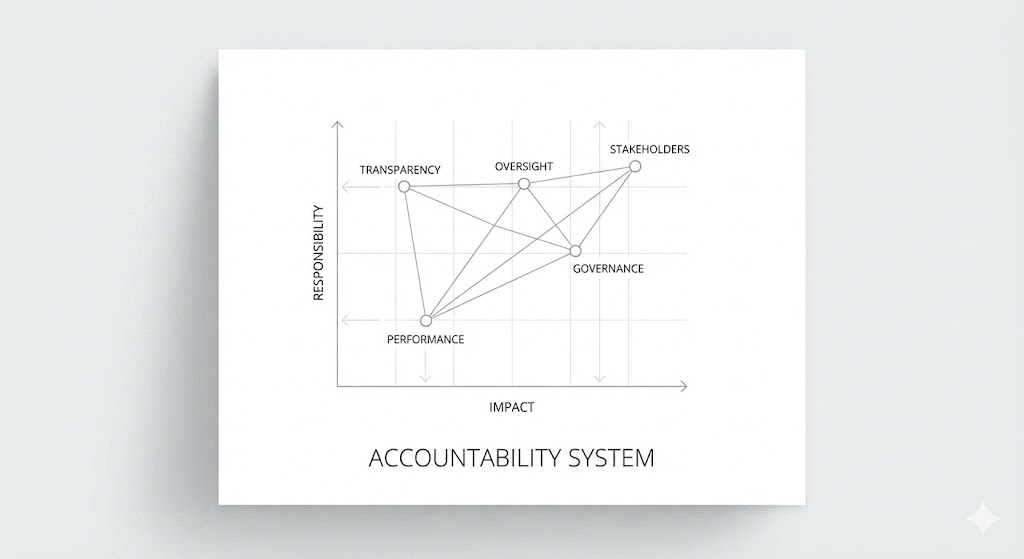
 This isn’t about turning capitalism into a moral tribunal. It’s about making optimization path-aware instead of outcome-only.
The Coordinate System Problem (and Why It Smells Like Authoritarianism)
The moment you say “vector,” you hit the problem nobody can dodge: vectors need axes.
If there’s a shared set of axes—security, prosperity, innovation, well-being, cohesion, sustainability—someone has to define them, maintain them, update them, and enforce their meaning. Even if you claim neutrality, standards create gravity. Gravity creates hierarchy.
That’s the authoritarian creep people correctly worry about.
And it gets worse: axes aren’t purely descriptive. The second you formalize them, you privilege certain values and freeze what “matters” into the infrastructure of society. That can be a disaster even when the intentions are good.
So if “vector money” requires a canonical coordinate system, it starts to resemble ideology with extra steps.
A Relativistic Escape Hatch: Let the Observer Define the Axes
There’s a way out that removes the central authority problem entirely: make it relativistic.
Instead of society defining the axes, each observer defines them.
Imagine a website where you can set your own priorities—your personal axes—and see companies plotted relative to what you care about:
- “Sustainability: high”
- “Price sensitivity: low”
- “Innovation: medium”
- “Labor ethics: high”
- “Local resilience: high”
Now you don’t need one official morality. You get a personalized value map layered on top of a neutral market. Money stays scalar. Capitalism stays capitalism. But perception becomes multi-dimensional.
A person can say:
“I’m fine if this bag supplier isn’t the cheapest, but I want them moving toward sustainable practices.”
That’s not regulation. That’s preference with visibility.
This starts to look less like “redesign money” and more like building a value search engine—a way to rank and filter companies based on your own declared priorities, not on whatever the platform pushes or whatever PR claims are trending.
The World Is Already Narrating Corporate Behavior—The Bottleneck Is Structure
If this idea sounds abstract, it’s worth noticing: the raw material already exists.
Every day, the world produces text that describes corporate behavior:
- “Company X signs a $YYY deal with Z”
- “New supplier announced”
- “Factory expansion”
- “Product line change”
- “Layoffs”
- “Regulatory action”
- “Court case”
- “Partnership with government agency”
The problem isn’t a lack of information. The problem is that it’s unstructured narrative, not coordinates.
Turning “Company X signs a defense contract” into movement along an axis depends on the observer:
- security positive
- militarization negative
- innovation positive
- humanitarian impact uncertain
- climate impact unknown
There is no objective mapping. But that’s okay if the user defines the axes and weights.
The task becomes: quantify the news—not by pretending it has one meaning, but by extracting events and letting different people interpret those events through their own value lenses.
What an “Accountability Layer” Could Actually Be
At the practical level, this doesn’t have to be grand theory. It can start with something simpler: make everything above board, and add an accountability layer.
Mechanically, that looks like three layers:
-
Event extraction
Convert unstructured text into structured events: who did what with whom, when, and in what domain. -
Network modeling
Build graphs: companies, suppliers, customers, regulators, subsidiaries, partnerships. Track relationships over time. -
Axis projection (user-defined)
Let observers define axes and weight event types. Then compute how an entity “moves” over time relative to those axes.
AI is useful here, but not as a moral judge. Its job is boring and infrastructural:
- parse disclosures and reporting
- extract entities and relationships
- detect drift over time
- summarize changes in plain language
- flag inconsistencies between claims and observable behavior
Call it a Fitbit for corporations. Not perfect truth—telemetry.
And yes, quantification compresses nuance. That’s unavoidable. The goal isn’t to create a final score that ends debate. The goal is to create visibility that makes debate grounded in something other than vibes and marketing.
Conclusion
Capitalism isn’t uniquely evil; it’s just extremely efficient at optimizing what can be cleanly measured. The more interesting question is whether we can build multi-dimensional visibility without centralizing value definition into an authoritarian standard. A relativistic layer—where observers define the axes and the system quantifies behavior—might be the cleanest compromise: neutral money, richer perception, real accountability. If transparency becomes cheap and legible, incentives start to move even without anyone “redesigning civilization.”